Your Cart is Empty

In our journey towards sustainable living, composting toilets, such as the Nature's Head Composting Toilet, have emerged as a beacon of innovation and practicality. This device is not just a toilet; it's a complete human waste compost system that promises a greener future. One common question from eco-conscious individuals is how is thetoilet paper usage in composting toilets. Let’s delve deeper into the synergy between the Nature's Head Composting Toilet and bathroom tissue, exploring its components like the solid waste container and liquid waste vessel.
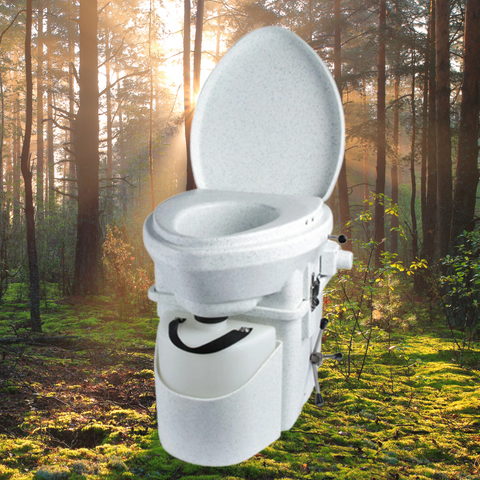
At its core, the Nature's Head Composting Toilet is a marvel of simplicity and eco-efficiency. It comprises two main sections: a solid waste chamber for human solid wastes and a separate storage container that acts as a urine bottle. This division is critical for facilitating effective compost, minimizing odors, and ensuring that solid wastes and liquid wastes are efficiently managed.
Toilet Paper Compatibility: The design of Nature's Head allows compatibility with a wide range of toilet paper types. Choosing paper that disintegrates easily prevents clogging and aids in quicker composting. Biodegradable and septic-safe toilet papers are highly recommended for their ease of breakdown, ensuring the solid waste chamber functions optimally.
Role in Composting: TP isn't just a necessity; it plays an active role in the composting process. When added to the solid waste container, alongside any dry compost medium such as organic sphagnum peat moss or coconut coir, it decomposes with human waste. The carbon from the toilet paper balances the nitrogen in human waste, which is crucial for a healthy composting process and for keeping odors at bay.
Volume and Usage: While Nature's Head is adept at handling TP, the amount used matters. Excessive use can lead to more frequent emptying of the solids tank. Under normal usage, the bin efficiently accommodates both waste and toilet paper, along with other compost material, for several weeks.
Maintenance: Regular turning of a handle mixes the bin contents in the composting chamber, ensuring even decomposition. The inclusion of tissue in the solid waste tank does not impede this process, and the use of natural cleaners instead of commercial cleaning compounds can prevent proper compost action from being hindered. Upon emptying, the composted material, including the toilet paper, should have transformed into a nutrient-rich, soil-like substance, suitable for trees, shrubs and other non-edible plants.
Environmental Benefits: Opting for recycled or sustainably sourced TP enhances the ecological advantages of using a composting toilet like Nature's Head. The waterless operation significantly reduces water consumption, and the separation of liquid and solid wastes through a trap door ensures that only non-composted wastes require disposal, often in a traditional compost bin or other appropriate facility.
Nature's Head Composting Toilet exemplifies modern solutions that align with ecological responsibility without sacrificing convenience. Its compatibility with toilet paper, straightforward maintenance, and the ability to turn fresh human wastes into compost material makes it an ideal choice for those seeking a sustainable and practical bathroom solution. It also helps that the toilet is easy to clean. Emptying the liquid tank is similar to emptying any makeshift liquid waste container. The contents of the solids bin can also be properly disposed of in a compost pile or proper composting bin through the trash bag method. Furthermore, unlike your conventional toilet, the use of chemicals or other commercial cleaning compounds is not necessary. Its design, including features like a urine tank holder and a sphagnum peat moss medium, supports the composting process, ensuring that solid waste adheres to the principles of proper composting action, while a liquid container system prevents any unpleasant odor. If in case an overflow of the liquid waste container occur, this should not be a problem as the liquid will still be confined to the container base. This can also be easily addressed by having an additional liquid waste container.


We at Wild Oak Trail decided to get ourselves our own Nature's Head Composting Toilet to see what the fuss is all about! Check out our YouTube videos as we explore why the Nature's Head Composting Toilet is the favorite among preppers, adventure seekers, and the RV living community, from its unboxing to its full utilization.
Questions about choosing or looking after a composting toilet? Call, text or chat with us at 1-844-945-3625, or email customersupport@wildoaktrail.com.
Yes. Toilet paper goes straight into the solids bin with the waste and composts along with it. It breaks down more slowly than the waste, so you may still see some after the solids have broken down.
Thin paper that breaks apart easily composts fastest, such as biodegradable, septic-safe or marine and RV toilet paper. Any toilet paper will work, but thicker brands stay visible longer in the bin. Recycled or sustainably sourced paper adds to the environmental benefit.
It can if you use a lot of it. Heavy toilet paper use takes up room in the solids bin and means more frequent emptying. With normal use, the bin holds waste, paper and composting medium for several weeks.
Toilet paper adds carbon, which balances the nitrogen in human waste. That balance supports healthy composting and helps keep odors down. It works alongside the peat moss or coconut coir already in the bin.
No. The paper stays in the solids bin and comes out with the rest of the composted material when you empty it. With the trash bag method, the whole load goes to a compost pile or composting bin together.
Get expert help with your composting toilet.

Comments will be approved before showing up.