Your Cart is Empty

When choosing an efficient, reliable heating system, many homeowners turn to propane wall heaters like the Martin Propane Heater. These units offer a versatile solution for heating a single room or an entire home.
Here's an honest look at the pros and cons of propane wall heaters, and how they stack up against electric heaters and gas furnaces, to help you decide if one is right for your home.


Compared to an electric heater, propane wall heaters offer lower operating costs and more reliable heat during power outages. Compared to a natural gas furnace, propane runs from a tank rather than a buried utility line, which gives you more flexibility in where and how you install one, especially useful if natural gas service isn't available at your property.
1. Efficiency and cost-effectiveness. Propane wall heaters convert fuel to heat efficiently, often outperforming electric resistance heaters on operating cost.
2. Reliable heat source. Since they don't depend on electrical power, propane heaters keep working through outages when electric systems go dark.
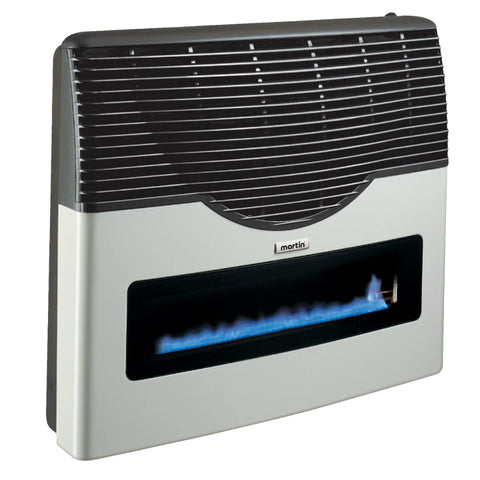
3. Versatility. These heaters work well for a single room or as the primary heat source for a whole home, and they're particularly useful in older houses where installing full central heating would be impractical.
4. Safety features. Direct-vent models include built-in overheat protection and an oxygen depletion sensor, reducing risk when properly installed and maintained.

5. Space-saving design. Wall-mounted units free up floor space entirely, a real advantage in smaller rooms.
Compared to electric furnaces, propane wall heaters offer more reliable heat during outages and generally lower operating costs. Compared to natural gas, propane is the more flexible option anywhere a gas line isn't available, though it produces somewhat more emissions per unit of energy than natural gas does.

| Direct Vent | Vent-Free | |
|---|---|---|
| Safety | Draws combustion air from outside and exhausts outside, significantly reducing indoor air contamination and CO risk | Releases combustion byproducts into the room; requires ventilation and a CO detector |
| Efficiency | Highly efficient with minimal heat loss in the venting process | All heat stays in the room, but air quality needs active monitoring |
| Installation | Requires venting through an exterior wall for safe, long-term operation | Simpler and cheaper to install, with more placement flexibility |
| Air Quality | Keeps combustion entirely separate from indoor air | Releases water vapor and some CO into the room, requiring active management |
| Regulations | Generally compliant with local building codes | Often restricted or prohibited in certain jurisdictions over air quality concerns |
| Flexibility | Fixed installation, but reliable, consistent performance | Installable almost anywhere, with more placement options |
| Cost | Higher installation cost upfront, often offset by long-term safety and efficiency | Lower installation cost, but more ongoing air quality monitoring |
 Natural Gas Heaters
 A steady, often cheaper-per-BTU option where a gas line is already available. Long lifespan and low maintenance make it the practical default if your home already has natural gas service.
 Electric Furnaces and Wall Heaters
 Easier to install and maintain, but typically costs more to run and stops working during a power outage. Some radiant electric heaters provide faster felt warmth than a convection-based propane unit, though propane wins on sustained whole-room heat and grid independence.
 Space Heaters and Baseboard Radiators
 Effective for small spaces, but generally less powerful than a propane wall heater for a full room, and they take up floor space a wall-mounted unit doesn't.
Not quite. Natural gas generally burns cleaner with fewer emissions than propane. Propane is still considerably cleaner than oil or coal, just not the cleanest option among common heating fuels.
Mounting a direct-vent unit through an exterior wall is manageable for a confident DIYer. The propane gas connection itself should be completed by a licensed gas fitter to meet code and manufacturer requirements.
It depends on the type of electric heater. Radiant electric heaters can actually produce felt warmth faster since they heat people and objects directly. A propane wall heater's real advantage is steady, even heat across a whole room and the ability to keep running through a power outage.
Martin direct vent propane wall heaters offer a reliable, efficient heating solution for a wide range of homes. They come with real trade-offs, a propane tank, proper venting, and a higher upfront cost, but for many households those trade-offs are worth it for the reliability and lower long-term operating cost.
Whether you're heating a single room or your whole home, weigh installation requirements, local building codes, and ongoing maintenance alongside the benefits to find the right unit for your space.

Have any questions or would like to place an order? We'd love to help. Chat with our friendly customer service team by calling 1-844-945-3625, chatting in on our website, or emailing us at customersupport@wildoaktrail.com. We look forward to hearing from you!

Comments will be approved before showing up.
Betty Lessard
January 29, 2025
I purchased a 20,000 BTU Martin Wall Heater this year for my 400 sq ft tiny home. My pilot light will just randomly go out for no known reason. I have had my propane company come out to check my 500 gal tank. They changed the regulator on the tank just for good measure but that didn’t solve my problem. I had my installer come back and check it out and he sees no reason for it. The outside vent is protected from the wind so it’s not that. Do you have any suggestions as to why this could be happening. It could go out a couple times in one day or it could last 2-3 days without going out. It also doesn’t seem to matter where it’s set at low, medium or high. Please any suggestions would help.
Frustrated customer