Your Cart is Empty

As the weather turns cold, many homeowners look for ways to supplement central heat. Propane heaters like the Martin Propane Heater are a common choice for cabins, workshops, and rooms that central HVAC doesn't reach well.
Is it safe to run a propane heater indoors? For Martin's direct-vent lineup, yes, provided the unit is installed correctly and basic safety guidelines are followed. The sealed-combustion design is what makes that possible.

Martin's direct-vent lineup covers three sizes, all sharing the same sealed-combustion design:
These heaters are designed to provide strong heat output while using propane efficiently, which keeps operating costs down. The direct-vent design also warms rooms quickly and holds a consistent temperature once the thermostat is set.
All three MDV models are permanently wall-mounted appliances, not portable units. Installation requires a licensed gas fitter, an exterior wall with the correct thickness range for the through-wall vent, and minimum clearances from the floor and surrounding objects per the model's manual. Once installed, the unit stays in that location, similar to a built-in fireplace.
Martin heaters use simple controls, typically a low-to-high dial thermostat, making temperature adjustment straightforward. The glass-ceramic window on the 11,000 and 20,000 BTU models adds a visible flame for ambiance and lets you visually check that the burner is running normally.
Propane heaters carry real risks if the wrong type of unit is used or installed incorrectly. The primary concern with any combustion appliance is carbon monoxide (CO), a colorless, odorless gas that becomes dangerous in enclosed spaces without adequate air exchange. For vent-free heaters, that risk comes from burning propane using room air. Martin's direct-vent models address this differently, covered below.
Other general risks with propane appliances include leaks at fittings or connections, which can create fire or explosion risk if gas accumulates near an ignition source, and burns or fire hazards if a heater is placed too close to combustible materials. Proper installation and placement address most of these risks before they become a problem.
Martin's direct-vent heaters use a sealed combustion chamber. A concentric vent pipe draws fresh air in from outside the home and pushes exhaust, including any CO produced, back outside through the same wall penetration. The flame never draws on or releases anything into the room's air at all. This is the core mechanism that makes these models safe for continuous indoor use, more than any feature of the flame itself.
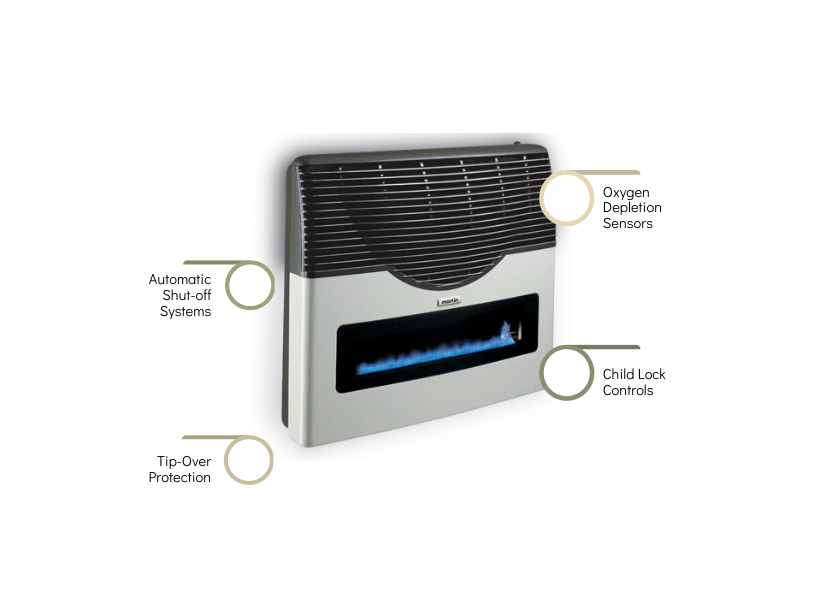
Martin's direct-vent models include an oxygen depletion sensor as an added layer of protection. Given the sealed combustion design already keeps the flame isolated from room air, the ODS functions as a backup safeguard rather than the primary defense against CO buildup, the way it would on a vent-free heater that does burn room air directly.
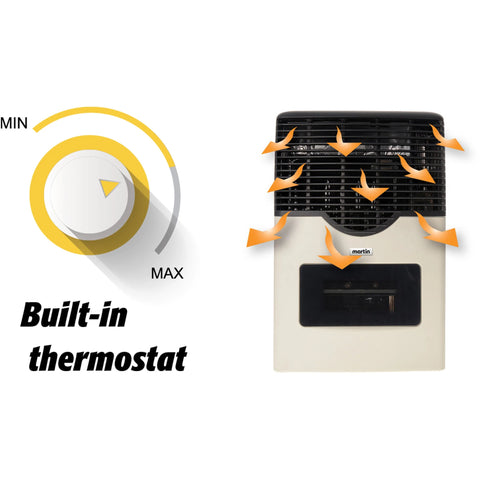
A built-in thermostat monitors the heater's internal temperature. If it exceeds a safe threshold, the thermostat cuts the propane supply and shuts the unit down, protecting both the appliance and the surrounding wall material.
If the pilot light goes out for any reason, this feature immediately cuts the gas supply rather than allowing unburned propane to continue flowing into the combustion chamber.

Even with a sealed-combustion design and multiple safety features, most fire safety authorities, including the NFPA, recommend against leaving any fuel-burning heater running unsupervised for extended periods, particularly while no one is home. That guidance applies to Martin's direct-vent models too, despite their safety record.
That said, a properly installed direct-vent heater with a working thermostat is commonly run continuously while people are home or asleep, which is a different scenario from leaving it running during a multi-hour or multi-day absence. Here's how the trade-offs break down for each:
If you want a heated space ready when you arrive home, a programmable thermostat that you control remotely, set to start shortly before arrival rather than running continuously while you're out, is a safer middle ground than leaving the unit on for an extended unattended period.

Yes. The MDV8P, MDV12VP, and MDV20VP use sealed combustion: air comes in from outside and exhaust, including any CO, goes back outside through the same through-wall vent. The flame never touches room air, which is the core reason these are rated safe for continuous indoor use when installed correctly by a licensed gas fitter.
No. The MDV series is permanently wall-mounted and requires professional installation on a qualifying exterior wall. They are not designed to be moved between rooms, used while camping, or operated without a fixed installation. Martin makes a separate portable line for that use case.
It's still good practice. While the sealed combustion design is specifically engineered to keep CO out of the room, a working detector is inexpensive insurance against any fuel-burning appliance in the home, including a furnace, water heater, or stove.
General fire safety guidance, including from the NFPA, recommends against leaving any fuel-burning heater running unattended for extended periods, regardless of its built-in safety features. Running the heater continuously while people are home or asleep is a more common use case than leaving it on during a multi-hour or multi-day absence.
It typically indicates incomplete combustion or a poor gas-to-oxygen mixture. A correctly operating Martin heater should burn with a steady blue flame. If you see yellow or orange, check for obstructions in the airway, inspect for gas line leaks, and confirm gas pressures match the manual's specifications.
Martin's direct-vent propane heaters are built around a sealed-combustion design that's specifically engineered to keep combustion byproducts out of your living space, which is what makes them safe for indoor use when properly installed. They are permanently wall-mounted appliances rather than portable units, and that distinction matters when matching the right product to the right use case. A working carbon monoxide detector, proper installation by a licensed gas fitter, and following the manufacturer's clearance and maintenance guidance round out a safe setup.
Browse the full Martin Heaters collection to compare models and find the right size for your space.
Have any questions or would like to place an order? We'd love to help. Chat with our friendly customer service team by calling 1-844-945-3625, chatting in on our website, or emailing us at customersupport@wildoaktrail.com. We look forward to hearing from you!

Comments will be approved before showing up.