Your Cart is Empty

SunStar Solar Refrigerator Review — Every Model Compared
Keeping food cold off-grid is one of those problems that sounds simple until you start doing the math. A standard kitchen fridge draws 100–400 watts, runs through an inverter that wastes 10%–15% of your power, and cycles on and off 24 hours a day. That's a serious drain on any solar power system.
A solar fridge solves this by running directly on DC power from your battery bank — no inverter, no conversion losses, and far lower energy consumption. If you're building a cabin, outfitting an RV, or living off-grid full-time, a purpose-built solar refrigerator is one of the smartest investments you can make. You can browse our top picks in the SunStar Solar Refrigerators & Freezers collection.
This guide covers everything you need to choose the right solar fridge: the three main technologies, what to look for in specs, our top picks, and how to size the unit for your setup.

Before comparing specific models, you need to understand the specs that actually matter for off-grid performance. Not all solar fridges are created equal, and the wrong choice can leave you with warm food and a drained battery bank.
This is the single most important spec. A solar fridge's power draw determines how large your solar panel array and battery bank need to be. The best solar fridges draw between 55W and 105W during operation. Compare that to a standard household fridge at 100–400W — plus the inverter losses on top.
Look for the "typical power draw" spec, not peak draw. Peak draw occurs briefly when the compressor kicks on and doesn't reflect actual daily energy use.
Thicker insulation means the compressor runs less often, which means lower power consumption and better temperature retention during cloudy days. Standard fridges use 2"–3" of insulation. The best solar fridges use 4"–4.6" of polyurethane insulation — roughly double. This is the difference between your food staying cold for 6 hours vs. 24+ hours if power goes out.
The compressor is the heart of any refrigerator. For solar applications, you want a compressor specifically designed for variable DC voltage — not a standard AC compressor with an adapter. Purpose-built DC compressors handle the voltage fluctuations inherent in battery-based power systems without performance issues.
Solar fridges range from 2 Cu Ft (portable coolers) to 21+ Cu Ft (full-size chest freezers). Match the capacity to your household size and intended use — we cover specific sizing recommendations below.
Three fundamentally different technologies power solar refrigerators. Each has distinct strengths and trade-offs.
DC compressor refrigerators are the clear winner for full-time off-grid use. They offer the best combination of efficiency, cooling power, and capacity. Absorption fridges have their place in RVs and occasional-use cabins, but they're less efficient and lose performance at altitude. Thermoelectric coolers are fine for keeping drinks cold on a road trip, but they can't replace a real fridge.
After analyzing the off-grid refrigerator market, SunStar consistently stands out for quality, efficiency, and purpose-built solar design. Here are our recommendations by use case.
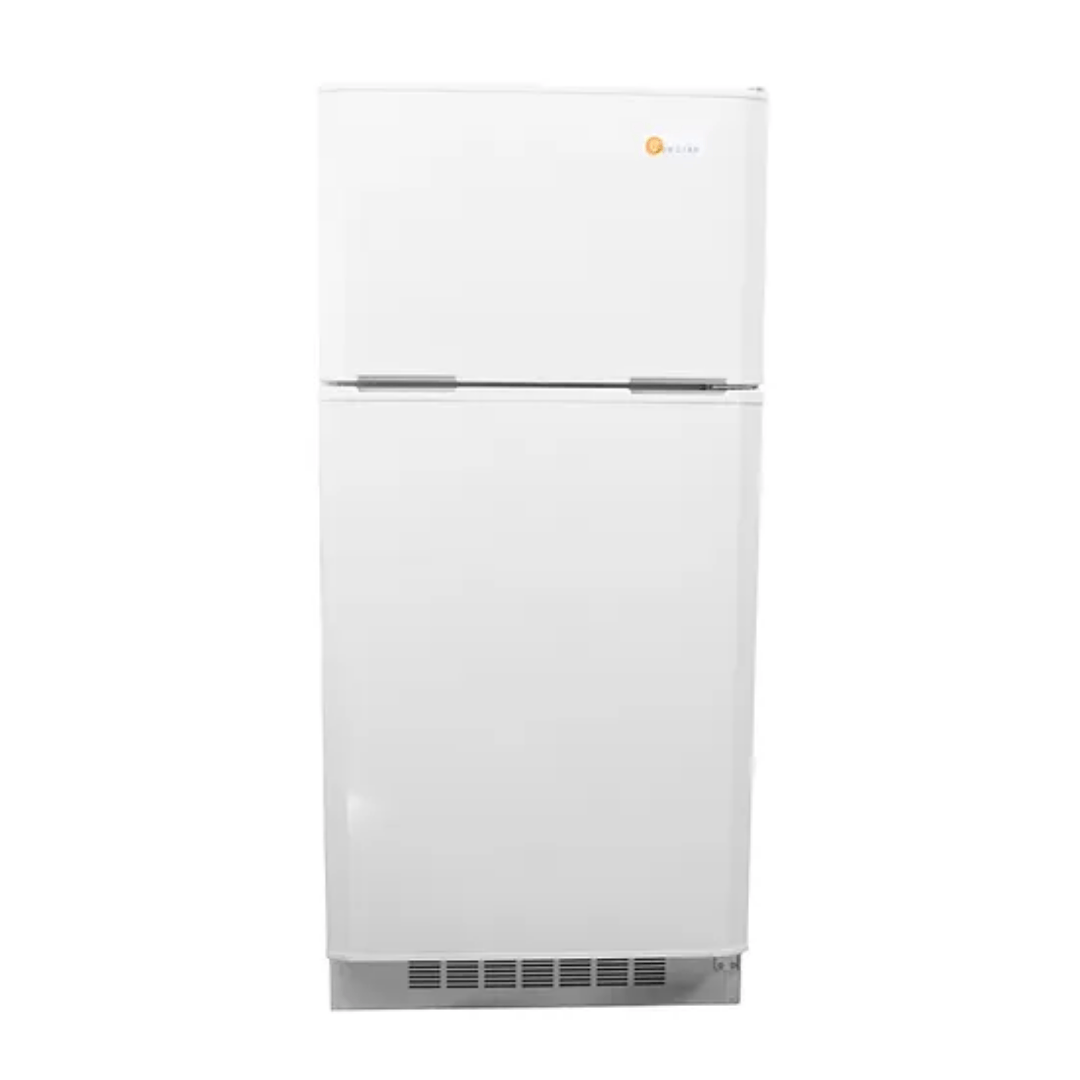
The SunStar ST-16RF is the largest upright solar refrigerator in North America and the most capable option for a primary household fridge. It features dual independent Keota compressors, simultaneous DC/AC input, 4" polyurethane insulation, and draws 40W–110W typical depending on ambient temperature and compartment settings.
Read our full SunStar model-by-model review for detailed specs on every model.
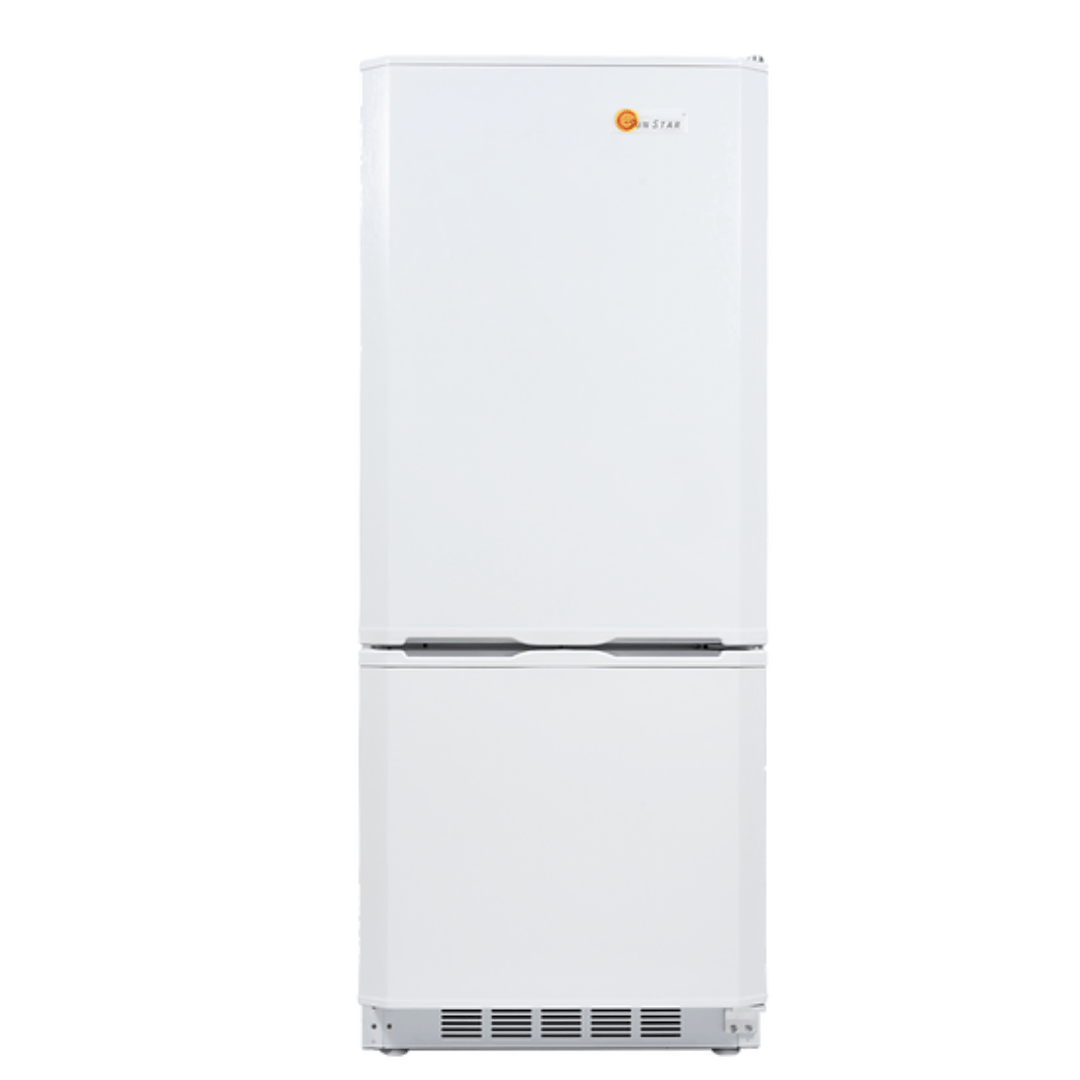
The SunStar ST-10RF shares all the ST-16RF's technology in a more compact package. At 23.5" wide, it fits in RV kitchens and tiny homes where the full-size model won't.
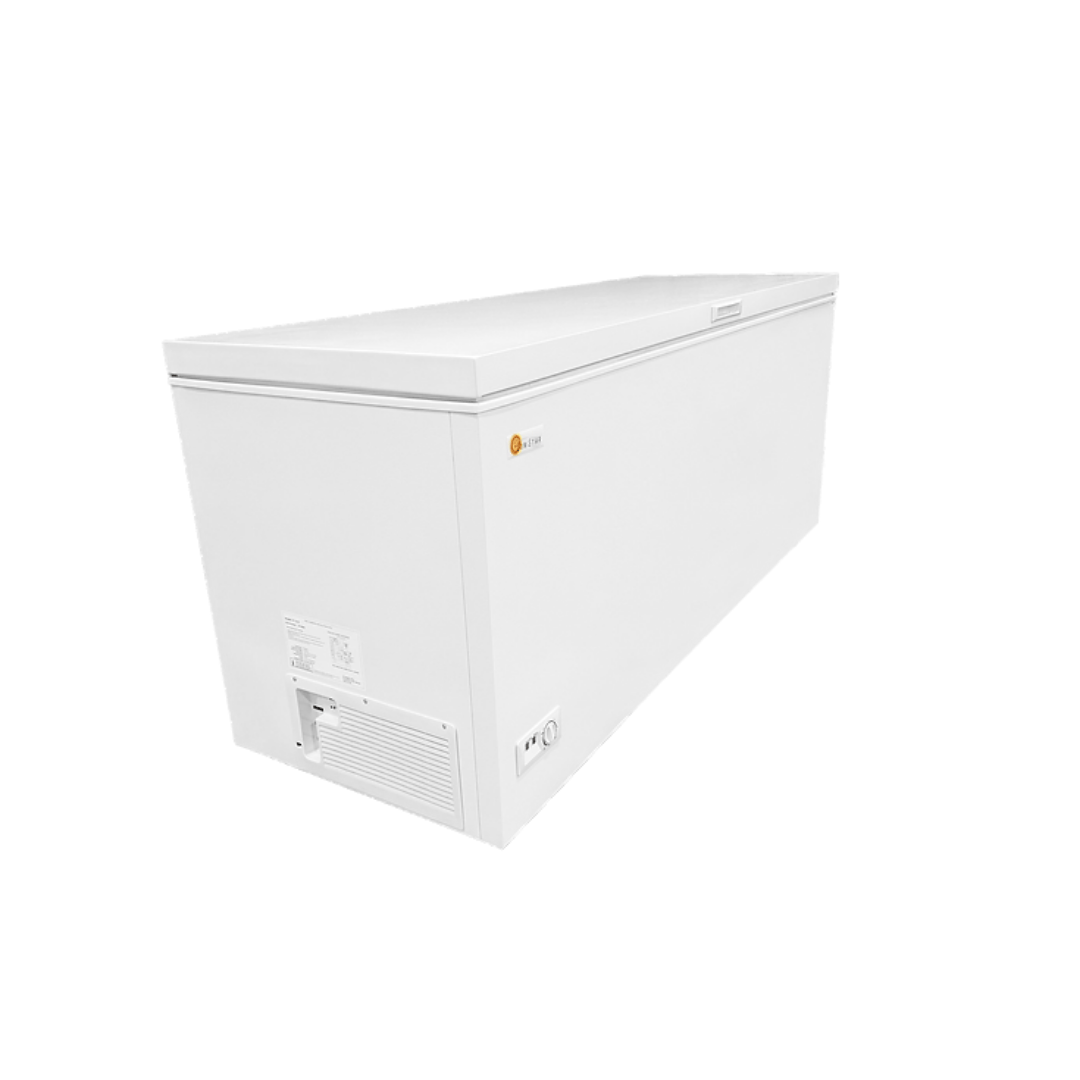
The SunStar 21CU freezer is the biggest solar chest freezer on the market. A double lid gasket and 4.6" insulation keep food frozen with minimal power draw. Available in both AC and DC configurations.
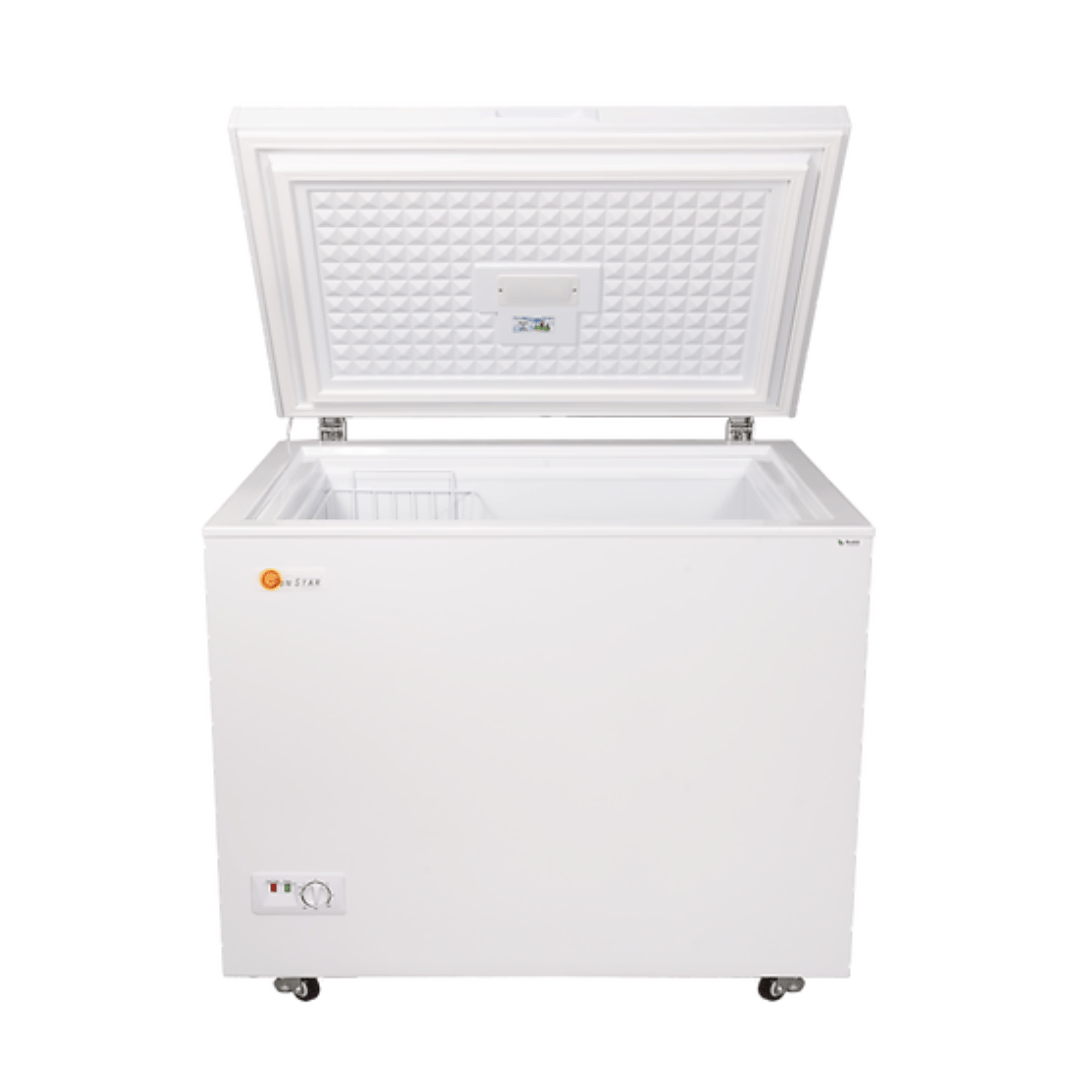
The SunStar 8CU chest freezer is the most affordable entry point into SunStar's lineup. DC-only operation keeps things simple, and the multi-function thermostat lets you use it as either a freezer or refrigerator.
Choosing the right capacity depends on your household size, how you use the space, and whether you need a fridge, a freezer, or both.
Rule of thumb: Allow 4–5 cubic feet per adult in the household for a refrigerator, and 3–4 cubic feet per person for dedicated freezer storage. If you're processing your own meat, canning, or growing a garden, you'll almost certainly want both an upright fridge and a chest freezer.
Some off-grid enthusiasts build their own solar fridges using conventional chest freezers with external thermostat controllers. This DIY approach can produce a functional solar-powered cooling solution at a lower upfront cost.
The basic concept is simple: take a standard chest freezer, add an external thermostat controller set to fridge temperatures (35°F–40°F), and wire it to an inverter or DC converter. The thick insulation in a chest freezer combined with the lower temperature differential means the compressor runs infrequently.
A DIY conversion works, but it has meaningful drawbacks:
A purpose-built solar fridge like the SunStar models eliminates all of these compromises. The Keota compressor is designed for variable DC voltage, the insulation is thicker (4"–4.6" vs. 2"–3" typical), and the dual-input upright models switch between power sources automatically. Over a 10-year ownership period, the efficiency gains and avoided inverter costs close the price gap significantly.
For most solar fridges drawing 55–60W, a single 200W–300W solar panel is sufficient. Larger models (15–21 Cu Ft) may need 300W–500W. The key factor is your battery bank — it stores energy for overnight and cloudy periods. A 100–200Ah lithium battery bank paired with the right panel size handles most setups. See our SunStar review for model-specific sizing.
Quality solar refrigerators last 15–20 years with proper maintenance. DC compressors have fewer moving parts than AC equivalents and cycle less frequently thanks to thicker insulation, which reduces wear. SunStar units come with a 2-year performance warranty, and the Keota compressor is built for continuous off-grid duty.
Yes, but power consumption increases significantly with ambient temperature. Running the ST-16RF with both the fridge compartment (38°F) and freezer compartment (0°F) draws around 260 Wh per day at 70°F, climbing to 433 Wh per day at 90°F. Running the fridge compartment only draws as little as 155 Wh per day at 70°F, but most households use both compartments. The 4"–4.6" insulation helps considerably compared to standard fridges. If you're in a hot climate, size your solar array 25%–50% larger than the baseline recommendation.
A solar fridge runs directly on 12V/24V DC from your battery bank. A regular fridge requires a power inverter to convert DC to AC, losing 10%–15% of your energy in the process. Solar fridges also use compressors designed for variable DC voltage and have thicker insulation optimized for battery-powered operation. The result is 33%–50% less total energy consumption.
Solar fridges with DC compressors are very quiet — typically comparable to or quieter than a standard household fridge. They're significantly quieter than propane absorption fridges and dramatically quieter than running a generator. Most SunStar owners report barely noticing the compressor cycling.
A solar fridge is one of the most impactful upgrades you can make to an off-grid power system. It eliminates the inverter, cuts energy consumption by a third to a half, and gives you dependable refrigeration that runs silently on sunshine.
For most off-grid households, a DC compressor fridge is the right technology. The SunStar ST-16RF is our top pick for families needing a full-size fridge, while the ST-10RF fits smaller spaces perfectly. Add a chest freezer from the same lineup if you're preserving garden harvests or stocking up on meat.
Browse the full SunStar lineup to find the right model for your setup, or read our complete SunStar review for detailed specs on every model.

Comments will be approved before showing up.