Your Cart is Empty

SunStar Solar Refrigerator Review — Every Model Compared
If you're setting up an off-grid cabin, homestead, or RV, refrigeration comes down to two realistic options: a solar-powered DC fridge or a propane absorption fridge. Both work without grid electricity. Both keep food cold. But the similarities end there.
The decision affects your budget, safety, daily convenience, and long-term costs for years to come. This comparison breaks down the real-world differences — not theory, but actual performance, costs, and practical trade-offs that matter when you're living off-grid. If you already know you want solar, browse the SunStar Solar Refrigerators & Freezers collection.
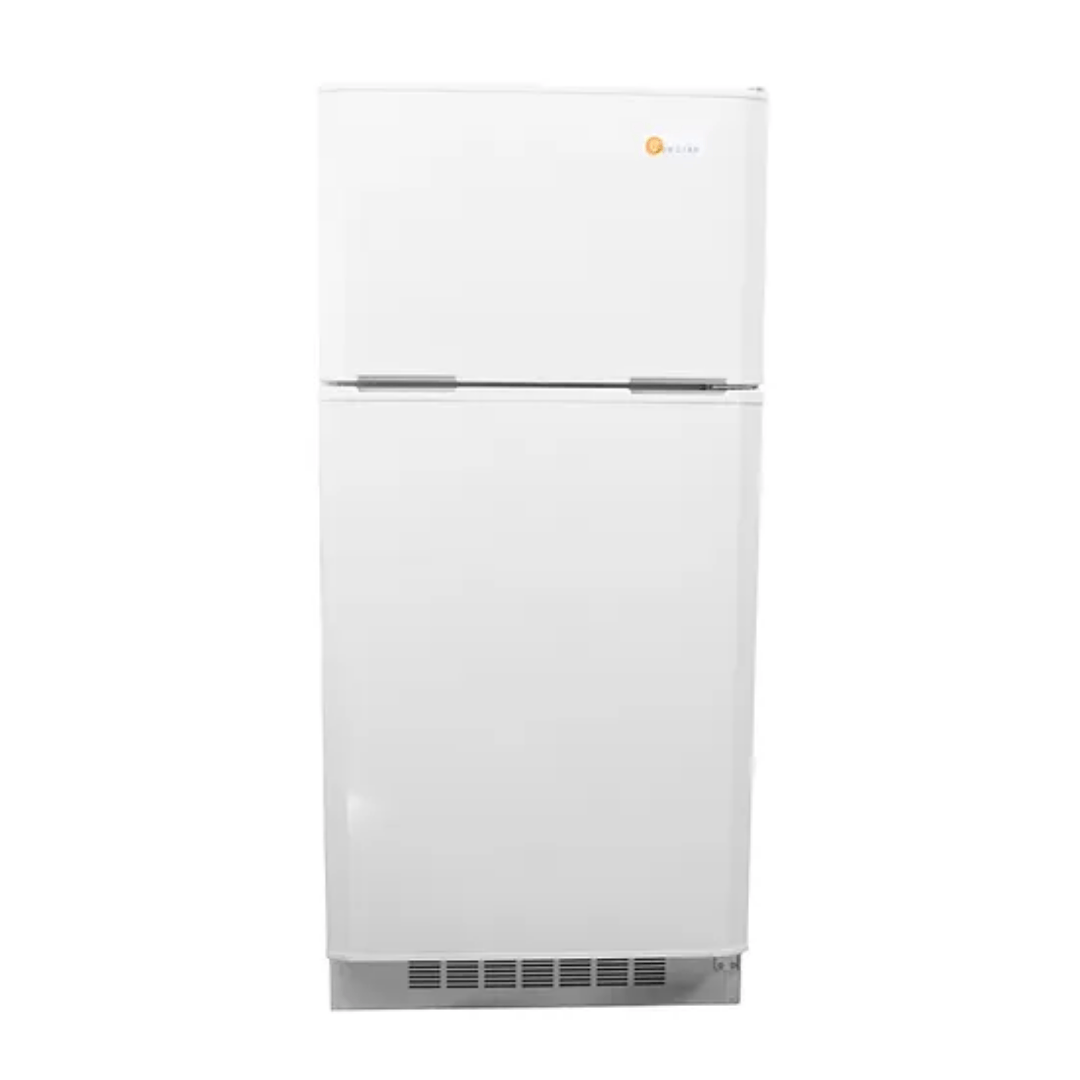
A solar DC fridge uses a compressor-based refrigeration cycle — the same fundamental technology as your kitchen fridge, but engineered for battery power. The compressor circulates refrigerant through coils, absorbing heat from inside the unit and releasing it externally. The difference is that the compressor runs directly on 12V or 24V DC power from your battery bank, charged by solar panels.
Purpose-built solar fridges like the SunStar ST-16RF use compressors designed specifically for the variable voltage that comes with battery-based power systems. Standard compressors expect consistent voltage; DC solar compressors handle the natural fluctuations without efficiency loss.
The key advantages: no inverter needed (eliminates 10%–15% conversion loss), ultra-thick insulation (4"–4.6") reduces compressor run time, and typical power draw ranges from 40W–110W depending on ambient temperature and which compartments are running.
Propane absorption fridges use a completely different mechanism. There's no compressor and no moving parts. Instead, a propane flame heats an ammonia-water solution, causing the ammonia to evaporate and absorb heat from inside the fridge as it circulates through the system. The cycle is continuous as long as the flame burns.
This design has been around for decades and was the standard off-grid refrigeration solution before solar power became affordable. The main appeal is simplicity — no electricity required, no battery bank, no solar panels. Just propane and a flame.
However, that simplicity comes with significant trade-offs in efficiency, safety, and long-term costs.
This is where the comparison gets decisive. Solar fridges cost more upfront but have near-zero ongoing costs. Propane fridges are cheaper to buy but create a permanent fuel expense.
Break-even point: A solar fridge typically pays for itself vs. propane in Year 2–3. After that, every year of ownership is essentially free refrigeration. Propane prices also fluctuate — in remote areas with delivery fees, costs can exceed $6–$7 per gallon, pushing the savings even higher.
Solar DC fridges maintain precise temperatures through thermostat-controlled compressor cycling. Dual-thermostat models control each compartment independently, keeping the freezer at 0°F and the fridge at 37°F regardless of external conditions.
Propane absorption fridges are less precise. They rely on gravity and heat to circulate refrigerant, making them sensitive to ambient temperature. In hot weather (90°F+), absorption fridges struggle to maintain safe food temperatures.
This is a critical factor many buyers overlook. Propane absorption fridges lose efficiency above 5,500 feet elevation. The reduced oxygen at altitude affects the propane flame, reducing heat output and cooling performance. If your off-grid property is in the mountains, this is a serious limitation.
Solar DC fridges are completely unaffected by altitude. The electric compressor operates identically at sea level and at 10,000 feet.
Solar fridges are available in much larger capacities. The SunStar ST-16RF offers 16 Cu Ft of dual-zone storage, and the ST-21CF chest freezer provides 21.5 Cu Ft. Most propane absorption fridges top out around 10–12 Cu Ft, with a few models reaching 18 Cu Ft.
Propane fridges produce combustion byproducts, including carbon monoxide (CO). They require proper ventilation — either an external vent or installation in a well-ventilated space. In enclosed environments like RVs and tight cabins, a malfunctioning propane fridge poses a real CO poisoning risk. A CO detector is mandatory, not optional.
Solar fridges produce zero emissions. No combustion, no CO, no ventilation requirements. You can place them anywhere in your home.
Any propane appliance carries some fire risk. The pilot light can ignite nearby materials, and a gas leak combined with a flame creates obvious danger. Some homeowners' and RV insurance policies charge higher premiums for properties with propane appliances, or exclude coverage for propane-related incidents.
Solar fridges have no flame, no gas, and no impact on insurance premiums.
Propane fridges need dedicated ventilation — intake and exhaust vents that allow combustion air in and exhaust gases out. Solar fridges just need 2"–4" of clearance around the condenser coils for heat dissipation. No external venting required.
Choose a solar fridge if you:
Choose a propane fridge if you:
For the majority of off-grid homeowners, a solar DC fridge is the better long-term investment. The upfront cost premium pays for itself in 2–3 years, and you're left with safer, more efficient, higher-capacity refrigeration for the next 15+ years.
If you're ready to make the switch, the SunStar ST-16RF is the most capable solar fridge available — 16 Cu Ft, 40W–110W typical draw, dual-compressor, simultaneous DC/AC input. Read our full SunStar review for specs on every model.
Yes. While a solar fridge system costs $2,700–$3,150 upfront vs. $2,200 for propane, the solar system has near-zero annual operating costs. Propane runs $300–$500 per year. By Year 3, the solar fridge is cheaper overall, and the savings grow every year after that.
Yes. Solar fridges run on your battery bank, which stores energy collected during the day. A 200Ah lithium battery bank provides 24–48 hours of runtime at the low end of the ST-16RF's draw range, and around 17–20 hours under higher-load conditions such as hot ambient temperatures or running both compartments. The thick insulation (4"–4.6") also helps maintain temperature during compressor-off periods.
Not directly. Propane absorption and DC compressor technology are fundamentally different — you'd need to replace the entire fridge. The SunStar upright models are the most direct replacements, installing in the same kitchen space and connecting to your battery bank.
Not officially, but the market is shifting heavily toward solar DC refrigeration. As solar panel and battery costs drop, the economic case for propane weakens. Many new off-grid builds now default to solar, and the selection of quality propane fridges has shrunk over the past decade.
Dual-fuel absorption fridges switch between propane and 120V AC, but they still use less efficient absorption technology, require ventilation on propane, and max out at 10–12 Cu Ft. A dual-input solar fridge like the SunStar ST-10RF (DC + AC simultaneously) offers flexible power without the compromises of absorption technology.
The solar vs. propane fridge debate comes down to your timeline and priorities. Propane wins on upfront simplicity and cost. Solar wins on everything else — efficiency, safety, capacity, long-term savings, and maintenance.
For anyone building a new off-grid home or upgrading an existing setup, a solar DC fridge is the modern standard. The technology is proven, the economics are favorable after Year 2–3, and the safety advantages are meaningful. Browse the SunStar collection to find the right model for your home.
A solar DC fridge uses a compressor-based refrigeration cycle — the same fundamental technology as your kitchen fridge, but engineered for battery power. The compressor circulates refrigerant through coils, absorbing heat from inside the unit and releasing it externally. The difference is that the compressor runs directly on 12V or 24V DC power from your battery bank, charged by solar panels.
Purpose-built solar fridges like the SunStar ST-16RF use compressors designed specifically for the variable voltage that comes with battery-based power systems. Standard compressors expect consistent voltage; DC solar compressors handle the natural fluctuations without efficiency loss.
The key advantages: no inverter needed (eliminates 10%–15% conversion loss), ultra-thick insulation (4"–4.6") reduces compressor run time, and typical power draw is just 55–60W for a full-size unit.
Propane absorption fridges use a completely different mechanism. There's no compressor and no moving parts. Instead, a propane flame heats an ammonia-water solution, causing the ammonia to evaporate and absorb heat from inside the fridge as it circulates through the system. The cycle is continuous as long as the flame burns.
This design has been around for decades and was the standard off-grid refrigeration solution before solar power became affordable. The main appeal is simplicity — no electricity required, no battery bank, no solar panels. Just propane and a flame.
However, that simplicity comes with significant trade-offs in efficiency, safety, and long-term costs.
This is where the comparison gets decisive. Solar fridges cost more upfront but have near-zero ongoing costs. Propane fridges are cheaper to buy but create a permanent fuel expense.
Break-even point: A solar fridge typically pays for itself vs. propane in Year 2–3. After that, every year of ownership is essentially free refrigeration. Propane prices also fluctuate — in remote areas with delivery fees, costs can exceed $6–$7 per gallon, pushing the savings even higher.
Solar DC fridges maintain precise temperatures through thermostat-controlled compressor cycling. Dual-thermostat models control each compartment independently, keeping the freezer at 0°F and the fridge at 37°F regardless of external conditions.
Propane absorption fridges are less precise. They rely on gravity and heat to circulate refrigerant, making them sensitive to ambient temperature. In hot weather (90°F+), absorption fridges struggle to maintain safe food temperatures.
This is a critical factor many buyers overlook. Propane absorption fridges lose efficiency above 5,500 feet elevation. The reduced oxygen at altitude affects the propane flame, reducing heat output and cooling performance. If your off-grid property is in the mountains, this is a serious limitation.
Solar DC fridges are completely unaffected by altitude. The electric compressor operates identically at sea level and at 10,000 feet.
Solar fridges are available in much larger capacities. The SunStar ST-16RF offers 16 Cu Ft of dual-zone storage, and the ST-21CF chest freezer provides 21.5 Cu Ft. Most propane absorption fridges top out around 10–12 Cu Ft, with a few models reaching 18 Cu Ft.
Propane fridges produce combustion byproducts, including carbon monoxide (CO). They require proper ventilation — either an external vent or installation in a well-ventilated space. In enclosed environments like RVs and tight cabins, a malfunctioning propane fridge poses a real CO poisoning risk. A CO detector is mandatory, not optional.
Solar fridges produce zero emissions. No combustion, no CO, no ventilation requirements. You can place them anywhere in your home.
Any propane appliance carries some fire risk. The pilot light can ignite nearby materials, and a gas leak combined with a flame creates obvious danger. Some homeowners' and RV insurance policies charge higher premiums for properties with propane appliances, or exclude coverage for propane-related incidents.
Solar fridges have no flame, no gas, and no impact on insurance premiums.
Propane fridges need dedicated ventilation — intake and exhaust vents that allow combustion air in and exhaust gases out. Solar fridges just need 2"–4" of clearance around the condenser coils for heat dissipation. No external venting required.
Choose a solar fridge if you:
Choose a propane fridge if you:
For the majority of off-grid homeowners, a solar DC fridge is the better long-term investment. The upfront cost premium pays for itself in 2–3 years, and you're left with safer, more efficient, higher-capacity refrigeration for the next 15+ years.
If you're ready to make the switch, the SunStar ST-16RF is the most capable solar fridge available — 16 Cu Ft, 60W draw, dual-compressor, simultaneous DC/AC input. Read our full SunStar review for specs on every model.
Yes. While a solar fridge system costs $2,700–$3,150 upfront vs. $2,200 for propane, the solar system has near-zero annual operating costs. Propane runs $300–$500 per year. By Year 3, the solar fridge is cheaper overall, and the savings grow every year after that.
Yes. Solar fridges run on your battery bank, which stores energy collected during the day. A 200Ah lithium battery bank powers a 60W solar fridge for 24–48 hours continuously. The thick insulation (4"–4.6") also maintains temperature for hours even when the compressor isn't running.
Not directly. Propane absorption and DC compressor technology are fundamentally different — you'd need to replace the entire fridge. The SunStar upright models are the most direct replacements, installing in the same kitchen space and connecting to your battery bank.
Not officially, but the market is shifting heavily toward solar DC refrigeration. As solar panel and battery costs drop, the economic case for propane weakens. Many new off-grid builds now default to solar, and the selection of quality propane fridges has shrunk over the past decade.
Dual-fuel absorption fridges switch between propane and 120V AC, but they still use less efficient absorption technology, require ventilation on propane, and max out at 10–12 Cu Ft. A dual-input solar fridge like the SunStar ST-10RF (DC + AC simultaneously) offers flexible power without the compromises of absorption technology.
The solar vs. propane fridge debate comes down to your timeline and priorities. Propane wins on upfront simplicity and cost. Solar wins on everything else — efficiency, safety, capacity, long-term savings, and maintenance.
For anyone building a new off-grid home or upgrading an existing setup, a solar DC fridge is the modern standard. The technology is proven, the economics are favorable after Year 2–3, and the safety advantages are meaningful. Browse the SunStar collection to find the right model for your home.

Comments will be approved before showing up.