Your Cart is Empty

Sunstar Solar Refrigerators and Freezers — Full Collection
By Wild Oak Trail
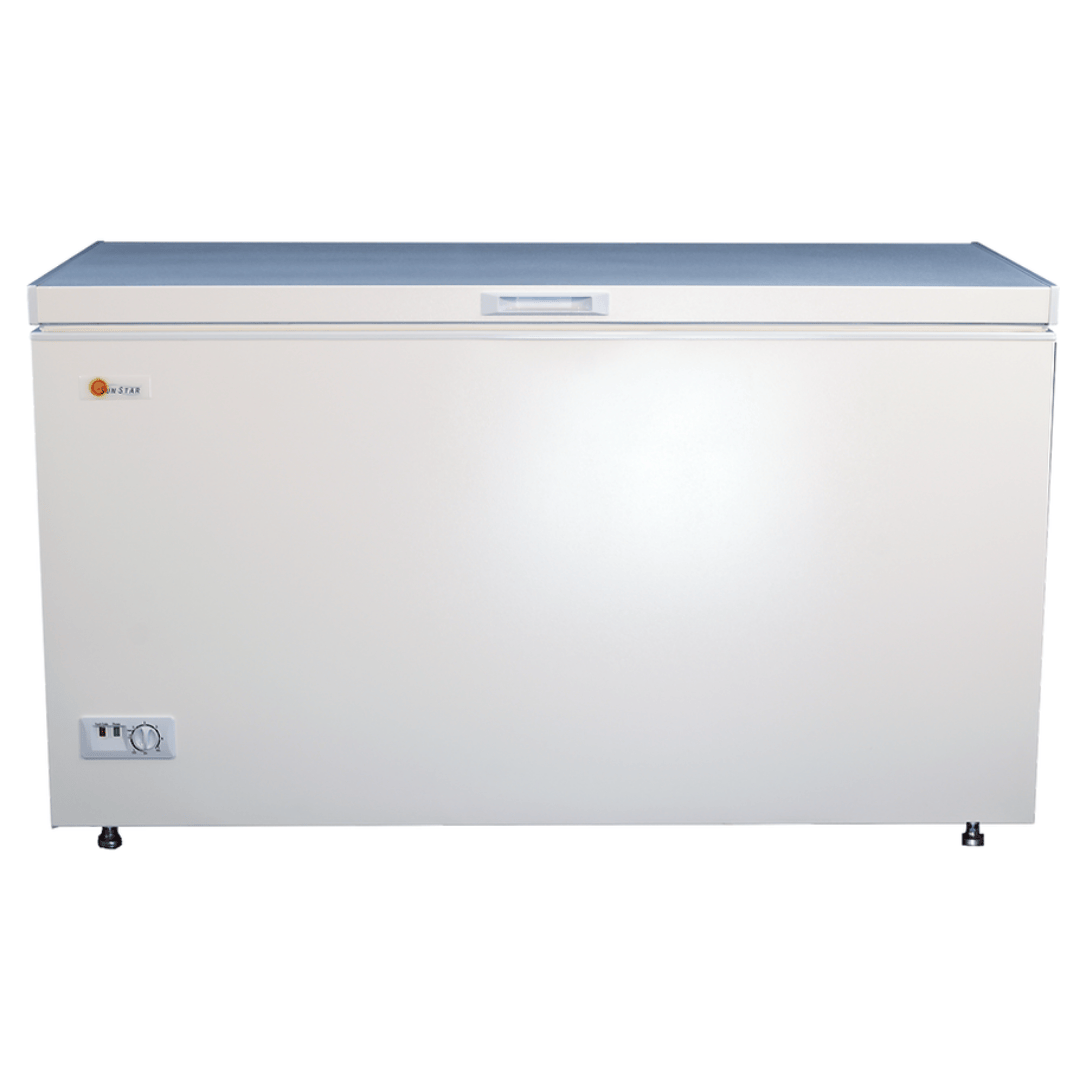
If you're planning an off-grid kitchen, setting up a hunting cabin, or building out a homestead, a solar freezer is one of the first appliances you should think about. Frozen storage is how you preserve a quarter of beef, a season of garden harvest, or a year of emergency food — and doing it on solar power used to be either impossible or painfully inefficient.
A solar freezer is a freezer designed to run on low-voltage direct current (DC) power from a solar-plus-battery system, typically at 12V or 24V, without an inverter. It uses a DC-native compressor tuned for the variable voltage that comes off a battery bank, ultra-thick insulation to extend compressor-off time, and a thermostat that stays stable across the full operating voltage range.
The key distinction is between solar-powered and solar-compatible. A conventional freezer run through a 120V AC inverter is solar-compatible — it works, but you lose 10%–15% of your energy to the inverter and another slice to a compressor not designed for battery voltage dips. A true solar freezer skips the inverter entirely and operates on a compressor built for DC service. That is what drives the dramatic efficiency gap.
Example: A standard 15-cubic-foot chest freezer might draw 350 Wh per day plugged into a wall. The same size Sunstar ST-15CF solar freezer in DC mode draws closer to 250–600 Wh per day under typical conditions — and those watts come straight from the battery with no conversion losses.
Solar freezers come in three configurations:
Most serious off-grid users go DC-only for the freezer. The efficiency gain is real, and you eliminate a major point of failure — the inverter — from your cold-storage line.
A solar freezer pulls DC electricity from your battery bank, runs it through a DC-native compressor, and uses thick polyurethane insulation to hold temperature between compressor cycles. The thermostat monitors interior temperature and fires the compressor only when needed — typically 30%–50% of the time under normal conditions.
The battery bank is charged during the day by your solar panels through a charge controller. At night and during cloudy stretches, the freezer draws from stored battery capacity. Because the compressor is optimized for DC and the insulation is 1.5"–2" thicker than a conventional freezer, the total daily draw is dramatically lower than a grid-tied unit.
A practical example: A 15-cubic-foot Sunstar chest freezer paired with a 300W solar array and a 200Ah lithium battery will run indefinitely in most of the continental US, even through 2–3 consecutive cloudy days. The freezer pulls about 80W–90W when the compressor runs, cycles roughly 8–12 times a day, and uses about 400–600 Wh daily. A 300W panel produces 1,200–1,800 Wh on a decent day — you're banking 2–3x what you need.
Most purpose-built solar freezers are chest freezers, and there is a physics reason. Cold air is denser than warm air, so when you open a chest freezer from the top, the cold air stays inside. When you open an upright freezer from the front, cold air rolls out onto the floor and warm room air replaces it. That single design difference can cut daily energy use by 20%–30% in a household that opens the freezer multiple times a day. For solar setups where every watt matters, chest is almost always the right call.
Not every freezer labeled "solar" is built the same. Here is what actually matters when you compare units:
| Spec | What to Look For | Why It Matters |
|---|---|---|
| Compressor | DC-native (not AC + adapter) | Efficiency at low/variable voltage |
| Voltage Range | 10.6V–17V (12V) or 21.3V–31.5V (24V) | Keeps running as batteries discharge |
| Running Wattage | 55W–105W for 8–21 Cu Ft | Determines solar/battery sizing |
| Insulation | 4"–4.6" polyurethane | Longer hold time, fewer cycles |
| Refrigerant | R600a (isobutane) or R134a | R600a is greener and slightly more efficient |
| Warranty | 2 years minimum | Signals the manufacturer stands behind it |
| Country of Origin | US-built preferred | Faster parts and service turnaround |
You'll also want to confirm the unit has a multi-function thermostat — the feature that lets a chest freezer double as a refrigerator. That flexibility is genuinely useful when your storage needs shift seasonally.
Some features that sound good on paper do not matter much in an off-grid freezer:
Focus on the compressor, insulation, voltage range, and warranty. That is where the real engineering differences live.
Sizing the system behind a solar freezer is the step that trips up most first-timers. The math is not hard, but it needs real numbers — not manufacturer marketing.
The basic formula:
Here is what that looks like across real freezer sizes:
| Freezer Size | Running Watts | Daily Use (Est.) | Solar Panel | Battery Bank (12V) |
|---|---|---|---|---|
| 8 Cu Ft | 55W | 150–430 Wh | 200W | 100Ah |
| 10–12 Cu Ft | 60–75W | 180–500 Wh | 200–300W | 100–150Ah |
| 15 Cu Ft | 80–90W | 250–600 Wh | 300W | 200Ah |
| 21 Cu Ft | 95–105W | 300–700 Wh | 400–500W | 300Ah |
For a single 15 Cu Ft freezer at a typical off-grid cabin, a 300W panel + 200Ah lithium battery is the sweet spot. Jump to 400W and 300Ah if you're also running a solar refrigerator off the same system.
Ambient temperature affects freezer energy use more than most people realize. A freezer in a 90°F garage works 50%–70% harder than one in a 65°F basement. If your freezer lives in a hot space — a sunlit cabin, a south-facing shed, a hot summer kitchen — bump your solar array up by at least 25%.
Cold climates cut freezer energy use (the unit has less heat to fight), but they also reduce solar production in winter. Northern setups should size for winter sun-hours, often half of summer output, and plan for longer battery autonomy.
The Sunstar chest freezer line — ST-8CF, ST-15CF, and ST-21CF — is a good reference point for how a serious solar freezer is built. All three use patented in-house DC compressors, 4.5"–4.6" polyurethane insulation, and ship with 2-year warranties from a US manufacturer.
| Option | Efficiency | Upfront Cost | Best For |
|---|---|---|---|
| Dedicated DC Solar Freezer | Highest | $1,000–$2,300 | Full-time off-grid, homesteads, cabins |
| Conventional Freezer + Inverter | Medium | $600–$1,200 + ~$300 inverter | Part-time off-grid, grid-tied backup |
| Propane Freezer | Low (high fuel cost) | $1,500–$3,000 | No-solar cabins, remote sites |
| 12V Portable Freezer | High for size | $500–$1,500 | RVs, truck camping, overlanding |
For a standard 8–16 Cu Ft solar freezer, plan on 200W–300W of solar panels and a 100–200Ah lithium battery bank. Larger 21+ Cu Ft units need closer to 400W–500W of solar and 300Ah of battery. These are minimums — add 25%–50% capacity if your freezer lives in a hot space or you want multiple days of cloudy-weather autonomy.
Yes. That is exactly what purpose-built DC solar freezers are designed for. With a properly sized solar array and battery bank, a modern solar chest freezer runs continuously year-round. The thick insulation (4"–4.6" polyurethane) and low running wattage (55W–105W) make the energy demand manageable even in northern climates with shorter winter days.
Yes, and they are often more efficient in cold weather because the temperature differential between inside and outside is smaller. The catch is solar production drops in winter. Size the array for winter sun-hours — often half of summer output — and make sure the freezer itself is not exposed to sub-freezing ambient temperatures, which can cause the thermostat to underperform.
A full solar chest freezer with 4.5"+ insulation will hold safe temperature for 24–72 hours with no power input at all, depending on ambient temperature and how full it is. A full freezer holds longer than a half-empty one because the mass of frozen food acts as thermal ballast. Plan on 24 hours as a conservative floor.
A solar freezer maintains sub-freezing temperatures (typically 0°F / -18°C) and is usually a chest design. A solar refrigerator holds above-freezing temperatures (34–40°F) and is usually an upright design with dual compartments. Most solar freezers include a multi-function thermostat that lets them run as refrigerators too, which makes them more versatile than dedicated fridges.
For off-grid use, yes. Over 5–10 years, the efficiency gain from a DC-native compressor plus the money you do not spend on an inverter and an oversized solar array typically makes the solar freezer cheaper to own than a conventional unit running off inverted solar power. For grid-tied households, the math rarely works — buy a standard Energy Star freezer instead.
A solar freezer is one of the most practical pieces of off-grid kit you can buy. The technology has matured, the efficiency numbers are real, and the upfront premium pays back quickly when you factor in the inverter you do not need and the solar array you do not have to oversize.
If you're building a serious off-grid kitchen, start with a chest design and a DC-native compressor. Look for 4"+ insulation, a multi-function thermostat, and a manufacturer that will actually answer the phone in year three. For most homesteads and cabins, a 15 Cu Ft solar chest freezer paired with 300W of solar and a 200Ah lithium battery is the sweet spot — enough storage for a quarter of beef plus a season of garden harvest, and a power budget small enough to fit almost any system.
Ready to look at specific models? Browse the Sunstar solar refrigerator and freezer lineup for the category's purpose-built options, or dig deeper with our full Sunstar model review comparing every unit side by side.
The key distinction is between "solar-powered" and "solar-compatible". A conventional freezer you run through a 120V AC inverter is solar-compatible — it works, but you lose 10%–15% of your energy to the inverter and another slice to a compressor that wasn't designed for battery voltage dips. A true solar freezer skips the inverter entirely and operates on a compressor built for DC service. That's what drives the dramatic efficiency gap.
Example: A standard 15-cubic-foot chest freezer might draw 350 Wh per day when plugged into a wall. The same size Sunstar ST-15CF solar freezer in DC mode draws closer to 250–600 Wh per day under typical conditions — and crucially, those watts come straight from the battery with no conversion losses.
Solar freezers come in three flavors:
Most serious off-grid users go DC-only for the freezer itself. The efficiency gain is real, and you eliminate a major point of failure (the inverter) from your critical cold-storage line.
A solar freezer works by pulling DC electricity from your battery bank, running it through a DC-native compressor, and using thick polyurethane insulation to hold cold temperature between compressor cycles. The thermostat monitors interior temperature and only fires the compressor when needed — typically 30%–50% of the time under normal conditions.
The battery bank is charged during the day by your solar panels through a charge controller. At night and during cloudy stretches, the freezer draws from stored battery capacity. Because the compressor is optimized for DC and the insulation is 1.5"–2" thicker than a conventional freezer, the total daily draw is dramatically lower than a grid-tied unit.
A practical example: A 15-cubic-foot Sunstar chest freezer paired with a 300W solar array and a 200Ah @ 12V lithium battery will run indefinitely in most of the continental US, even with 2–3 consecutive cloudy days. The freezer pulls about 80W–90W when the compressor runs, cycles maybe 8–12 times a day, and uses roughly 400–600 Wh daily. A 300W panel produces 1,200–1,800 Wh on a decent day — you're banking 2–3x what you need.
Most purpose-built solar freezers are chest freezers, and there's a physics reason. Cold air is denser than warm air, so when you open a chest freezer from the top, the cold air stays inside the box. When you open an upright freezer from the front, the cold air rolls out onto the floor and warm room air rolls in to replace it.
That single design difference can cut daily energy use by 20%–30% in a household that opens the freezer multiple times a day. For solar setups where every watt matters, chest is almost always the right call.
Not every freezer labeled "solar" is built the same. Here's what actually matters when you compare units:
| Spec | What to Look For | Why It Matters |
|---|---|---|
| Compressor | DC-native (not AC + adapter) | Efficiency at low/variable voltage |
| Voltage Range | 10.6V–17V (12V) or 21.3V–31.5V (24V) | Keeps running as batteries discharge |
| Running Wattage | 55W–105W for 8–21 Cu Ft | Determines solar/battery sizing |
| Insulation | 4"–4.6" polyurethane | Longer hold time, fewer cycles |
| Refrigerant | R600a (isobutane) or R134A | R600a is greener and slightly more efficient |
| Warranty | 2 years minimum | Signals the manufacturer stands behind it |
| Country of Origin | Matters for parts and support | US-built units have faster service turnaround |
You'll also want to check whether the unit has a multi-function thermostat — the feature that lets a chest freezer double as a refrigerator. That flexibility is genuinely useful when your storage needs shift seasonally.
Some features that sound great on paper don't matter much in an off-grid freezer:
Focus on the compressor, insulation, voltage range, and warranty. That's where the real engineering differences live.
Sizing the system behind a solar freezer is the step that trips up most first-timers. The math isn't hard, but it needs real numbers — not manufacturer marketing.
The basic formula:
1. Daily energy use (Wh) = Running wattage × Duty cycle × 24 2. Solar panel needed (W) = Daily energy use ÷ 4 (sun-hours) × 1.3 (safety factor) 3. Battery capacity (Ah @ 12V) = Daily energy use ÷ 12V × Days of autonomy
Here's what that looks like across real freezer sizes:
| Freezer Size | Running Watts | Daily Use (Est.) | Solar Panel | Battery Bank (12V) |
|---|---|---|---|---|
| 8 Cu Ft | 55W | 150–430 Wh | 200W | 100Ah |
| 10–12 Cu Ft | 60–75W | 180–500 Wh | 200–300W | 100–150Ah |
| 15 Cu Ft | 80–90W | 250–600 Wh | 300W | 200Ah |
| 21 Cu Ft | 95–105W | 300–700 Wh | 400–500W | 300Ah |
Notes on the numbers:
For a single 15 Cu Ft freezer at a typical off-grid cabin, a 300W panel + 200Ah lithium battery is the sweet spot. Jump to 400W and 300Ah if you're also running a solar refrigerator off the same system.
Ambient temperature affects freezer energy use more than most people realize. A freezer in a 90°F garage works 50%–70% harder than one in a 65°F basement. If your freezer lives in a hot space — a sunlit cabin, a south-facing shed, a hot summer kitchen — bump your solar array up by at least 25%.
Cold climates cut freezer energy use dramatically (the fridge has less heat to fight), but they also reduce solar production in winter. Northern setups should size for winter sun-hours (often half of summer) and plan for longer battery autonomy.
For buyers new to solar appliances, here's the honest tradeoff list:
Worth the premium:
Usually not worth it:
The Sunstar chest freezer line — ST-8CF, ST-15CF, and ST-21CF — is a good reference point for how a serious solar freezer is built. All three use Keota DC compressors, 4.5"–4.6" insulation, and ship with 2-year warranties from a US manufacturer.
If you're shopping for cold storage on a solar system, a purpose-built solar freezer isn't your only option. Here's how it compares to the common alternatives.
| Option | Efficiency | Upfront Cost | Best For |
|---|---|---|---|
| Dedicated DC Solar Freezer | Highest | $1,000–$2,300 | Full-time off-grid, homesteads, cabins |
| Conventional Freezer + Inverter | Medium | $600–$1,200 + $300 inverter | Part-time off-grid, grid-tied backup |
| Propane Freezer | Low (fuel cost) | $1,500–$3,000 | No-solar cabins, remote sites |
| 12V Cooler/Portable Freezer | High for size | $500–$1,500 | RVs, truck camping, overlanding |
The honest read:
A few myths come up over and over. Let's clear them.
Myth: A solar freezer needs direct sun on it to work. False. A solar freezer pulls power from your battery bank, which is charged by separate solar panels. You can put the freezer anywhere — basement, pantry, garage, shed — as long as the electrical run to the battery is reasonable.
Myth: Solar freezers stop working on cloudy days. Also false. That's the whole point of a battery bank. A properly sized system holds 24–48 hours of autonomy, and the freezer's thick insulation extends effective hold time further. In practice, most solar freezers ride through 2–3 cloudy days without issue.
Myth: You need a huge solar array to run a freezer. Not even close. A 200W–300W panel — one or two standard residential panels — runs most household-size solar freezers. Solar refrigeration is one of the lower-hanging fruits in off-grid power, not one of the hardest.
A dedicated solar freezer makes sense if you:
A solar freezer is probably not the right move if you:
For a standard 8–16 Cu Ft solar freezer, plan on 200W–300W of solar panels and a 100–200Ah @ 12V battery bank. Larger 21+ Cu Ft units need closer to 400W–500W of solar and 300Ah of battery. These are minimums — add 25%–50% capacity if your freezer lives in a hot space or you want multiple days of cloudy-weather autonomy.
Yes. That's exactly what purpose-built DC solar freezers are designed for. With a properly sized solar array and battery bank, a modern solar chest freezer runs continuously year-round. The thick insulation (4"–4.6" polyurethane) and low running wattage (55W–105W) make the energy demand manageable even in northern climates with shorter winter days.
Yes, and they're often more efficient in cold weather because the temperature differential between inside and outside is smaller. The catch is solar production drops in winter. Size the array for winter sun-hours (often half of summer output) and make sure the freezer itself isn't exposed to sub-freezing ambient temperatures, which can cause the thermostat to underperform.
A full solar chest freezer with 4.5"+ insulation will hold safe temperature for 24–72 hours with no power input at all, depending on ambient temperature and how full it is. A full freezer holds longer than a half-empty one because the mass of frozen food acts as thermal ballast. For planning purposes, assume 24 hours of safe hold time as a floor.
A solar freezer maintains sub-freezing temperatures (typically 0°F / -18°C) and is usually a chest design. A solar refrigerator holds above-freezing temperatures (34–40°F) and is usually an upright design with dual compartments. Most solar freezers include a multi-function thermostat that lets them run as refrigerators too, which makes them more versatile than dedicated fridges.
For off-grid use, yes. Over 5–10 years, the efficiency gain from a DC-native compressor plus the money you don't spend on an inverter and oversized solar array typically makes the solar freezer cheaper to own than a conventional unit running off inverted solar power. For grid-tied households, the math rarely works — buy a standard Energy Star freezer.
A solar freezer is one of the most practical pieces of off-grid kit you can buy. The technology has matured, the efficiency numbers are real, and the upfront premium pays back quickly when you factor in the inverter you don't need and the solar array you don't have to oversize.
If you're building a serious off-grid kitchen, start with a chest design and a DC-native compressor. Look for 4"+ insulation, a multi-function thermostat, and a manufacturer that will actually answer the phone in year three. For most homesteads and cabins, a 15 Cu Ft solar chest freezer paired with 300W of solar and a 200Ah lithium battery is the sweet spot — enough storage for a quarter of beef plus a season of garden harvest, and a power budget small enough to fit almost any system.
Ready to look at specific models? Browse the Sunstar solar refrigerator and freezer lineup for the category's purpose-built options, or dig deeper with our full Sunstar model review comparing every unit side by side.

Comments will be approved before showing up.